Artikel · Objektive

3D-Pop, den man nicht neu kaufen kann: Contax-Zeiss-Objektive

Die meisten Objektive, die ich zur Gala eines Kunden mitbringe, sind älter als manche der Gäste. Es sind Contax-Zeiss-Objektive mit fester Brenn­weite, die Zeiss zwischen 1975 und 2005 für Contax-Film­kameras gebaut hat, und meine stammen aus den Neunzigern. Sie sind voll­ständig manuell, ohne Auto­fokus und ohne Elektronik, und auf dem Daten­blatt schlägt sie fast jedes moderne Objektiv.

Trotzdem setze ich sie ein, wann immer ein Auftrag es zulässt. Damals drehte ich auf einer Sony mit einer Mischung aus Tamron- und alten Canon-FD-Objektiven, und als ich mein erstes Contax ausprobierte, veränderte sich das Bild auf dem Monitor. Die Person im Bild trat mit einer Tiefe hervor, die ich von einem Objektiv noch nicht gesehen hatte, als hätte das Bild eine Dimension mehr als der Bild­schirm, der es zeigt. Man nennt das 3D-Pop. Meine ersten beiden waren ein 50mm und ein 85mm, inzwischen ist das Set auf sieben Objektive gewachsen, und der Effekt packt mich immer noch, am meisten in dem Moment, in dem ich mitten im Job auf sie wechsle.

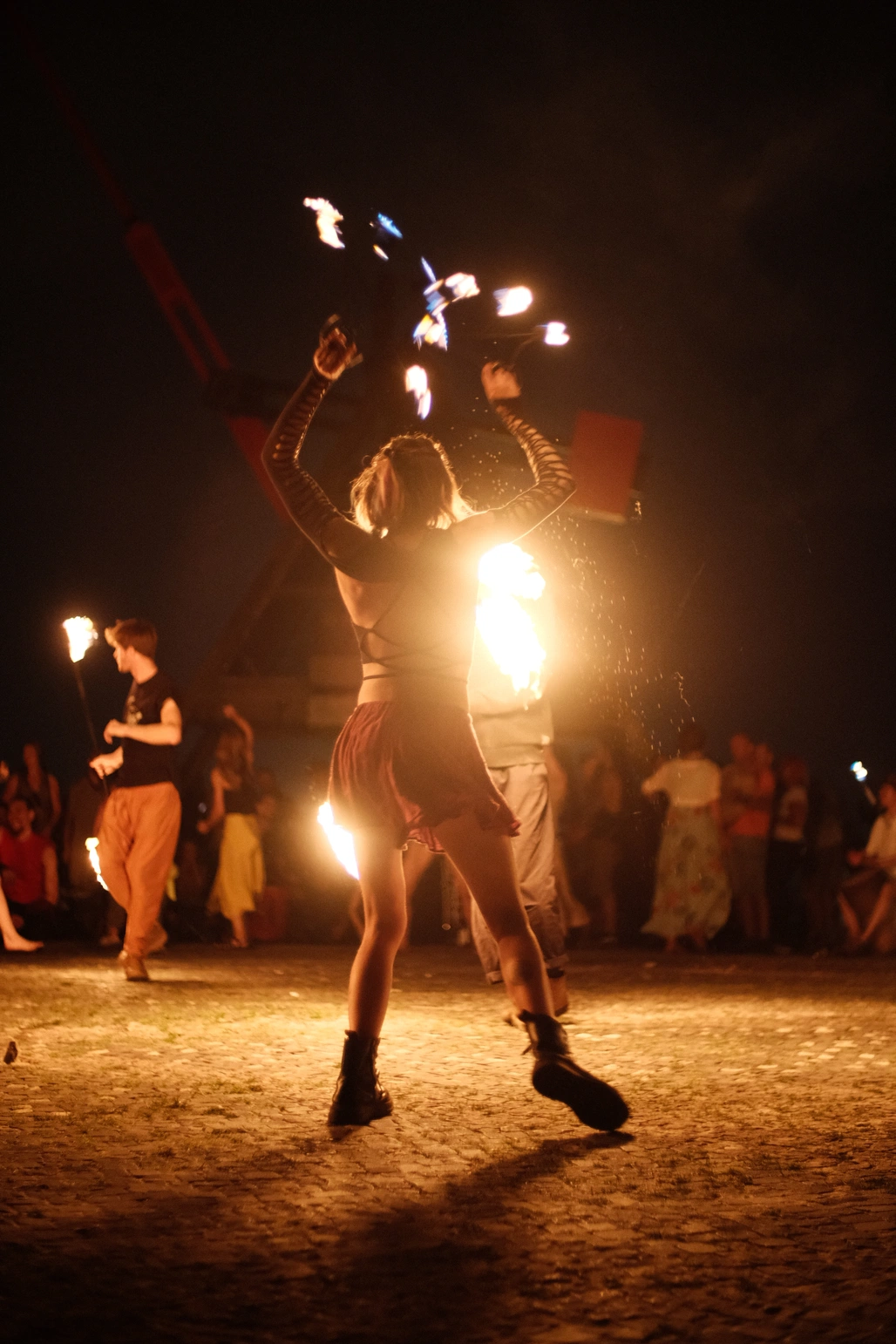
One of the pictures from early on that surprised me and convinced me, that these lenses are something special. Why does it look almost like a hologram?

Woher der 3D-Pop kommt

Der 3D-Pop steckt im Mikro­kontrast. Zeiss meint damit den Kontrast, den ein Objektiv in den feinsten Strukturen hält, die es abbildet, bei etwa 40 Linien­paaren pro Millimeter, im Unter­schied zum groben Kontrast zwischen großen hellen und dunklen Flächen. Einfach gesagt: Kontrast im Maßstab von Poren, Wimpern, Bart­stoppeln und dem Gewebe eines Sakkos. Wenn ein Objektiv diese feine Textur sauber hält, sieht ein Gesicht nicht mehr fotografiert aus, sondern anwesend: Die Haut hat Struktur und Wärme, die Augen behalten ihren Glanz, und die Kanten sind knackig. Der Fotograf und Objektiv­tester Lloyd Chambers schreibt auf Lenspire, dem Blog von Zeiss selbst, dass genau dieser erhaltene Kontrast „ein Bild lebendig und echt aussehen lässt“, und nennt das Ergebnis „Pop“, „3D-Rendering“ oder den „Biss“ feiner Details. Bessere Worte habe ich für diesen Effekt selbst nicht gefunden.

Smooth transitions The gradual falloff of the focus plane, a specific characteristic that differs from modern lenses, is one of the reasons that would give you the feeling there is something different about this picture, that it looks more alive and real somehow. 3D pop also isn't the same thing as shallow depth of field, which is where a lot of the confusion comes from. Marko Li, a filmmaker who writes about image quality on his Clever Ghost blog, makes the point in his long essay What is Image Quality, Really?: if dimensionality were just background blur, images would never look dimensional at f/8. They do. Most of my own footage is shot between f/2.8 and f/5.6 with plenty of the room still readable behind the subject, and the Contax lenses still make the person stand out from it. The separation comes from how the lens draws the subject, not from how hard it erases everything else.

Modern lenses aren't short on sharpness. Most current glass from Sony, Sigma or Fujifilm is corrected to a clinical degree, and at shallow depth of field it gives me what I think of as the green-screen look: the person looks pasted onto a blurry photo of the room, as if the two were taken on different days. The subject is sharp, the background is soft, and nothing connects the two. Li describes the same effect from his own comparisons. Lenses from Fujifilm, Sigma and Sony, he writes, can be as sharp as Zeiss "while somehow not looking as dimensional", looking "like a cut-out".

Part of the explanation is in how a lens draws the transition between a focused and an out of focus area. Stefan Ballmann of Zeiss research explains that lenses with spherical overcorrection tend to show a harsher transition from sharp to blurred areas, and that hard edges in that transition are often seen as artificial. That abrupt cliff between the sharp plane and everything behind it is exactly what reads as a green screen. With the Zeiss lenses the fall-off is gradual. The eye travels from the eyes to the ears, to the shoulders, to the room, and each plane is only a little softer than the one before, which to me is much closer to how a person actually looks standing in a room.

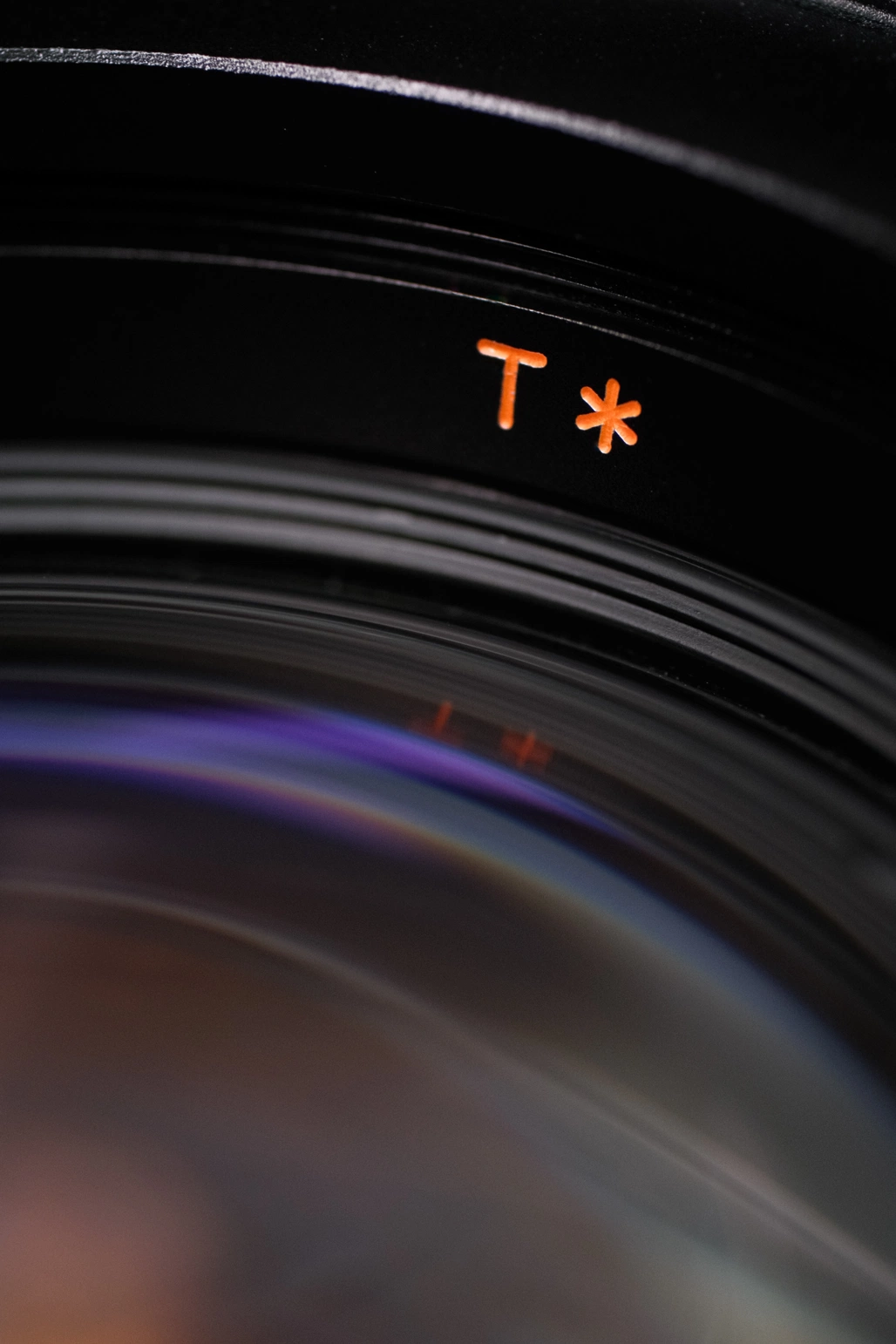
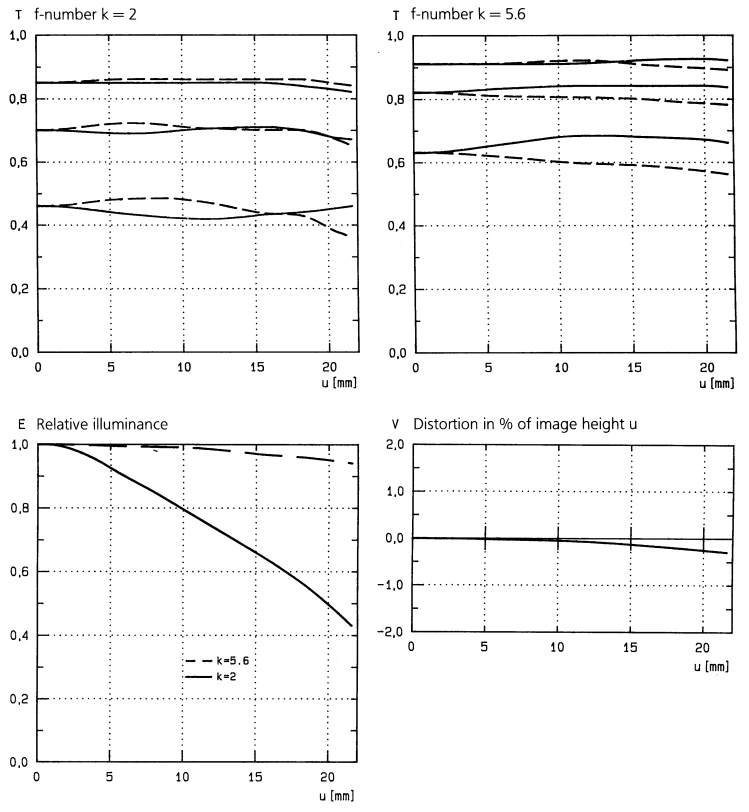
An objectively subjective chart MTF charts, which many photographers focus on to compare lenses, can you tell about a few aspects of the lens. But it suggests a complete and objective picture that in reality is omitting a lot of other data that is just as relevant. None of this shows up well on a chart, which is why the internet keeps arguing about whether 3D pop exists at all. An MTF chart measures contrast at a few spatial frequencies across the frame. It says nothing about how a face sits in a room or how the focus rolls off behind it. When Chambers kept pressing Hubert Nasse, who wrote Zeiss's reference papers on reading MTF curves, on what makes a lens perform well, Nasse answered, "it is the sum of everything": no single measurement tells you. Ballmann says no set of measurements can be "a proper substitute for the visual impression of a photo­graph taken under realistic conditions." Zeiss's T* anti-reflection coating plays a supporting part in that sum. The micro contrast comes from the optical design, and the coating keeps stray light from greying it out. No chart will settle that argument, but my own eyes settled it for me years ago.

For old lenses, the Contax Zeiss look remarkably un-vintage. There is no mushy softness wide open, no halos around highlights, and no swirly or busy bokeh competing with the subject for attention. Nick Morrison, whose Contax Zeiss Survival Guide on the REDUSER forum is still the reference text for people shooting these lenses on video, put it well: "The Contax don't look vintage to me, but they also don't look modern." That balance is what makes them usable on client work. A client wants their event to look beautiful and couldn't care less which decade the glass comes from, so an old lens with a heavy vintage signature is a risk I'd be taking on their behalf.

Lenses that have some decency

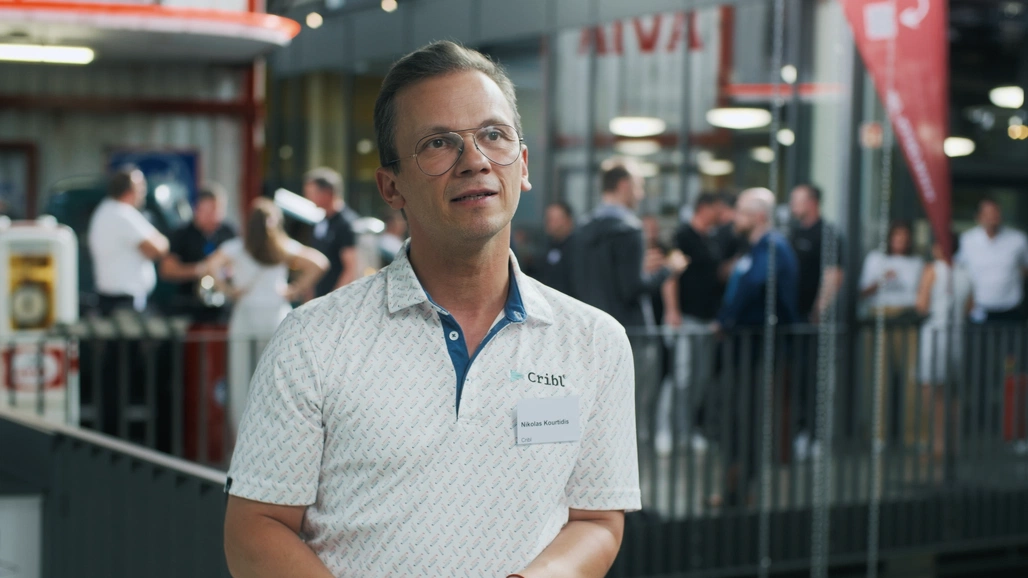
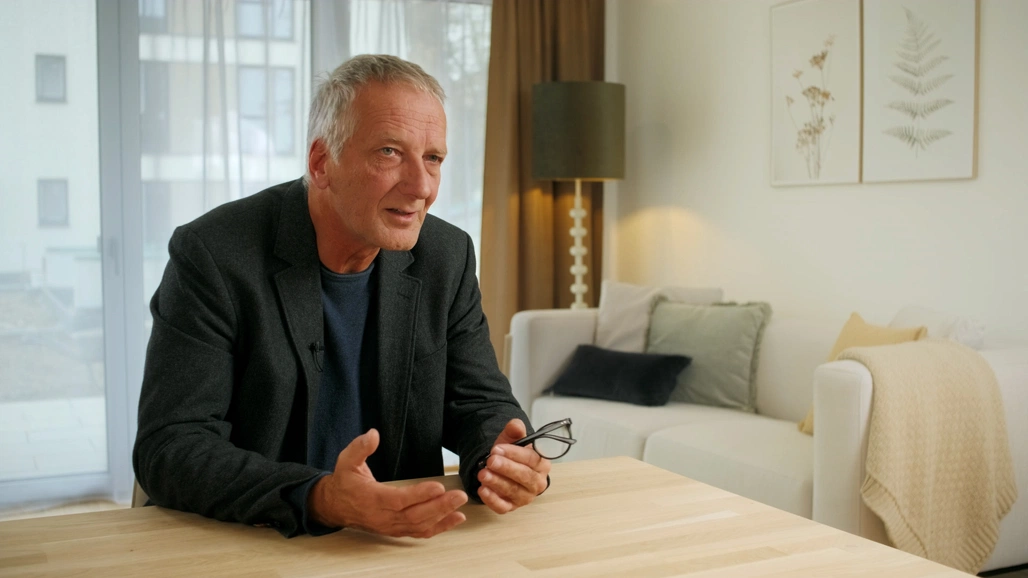
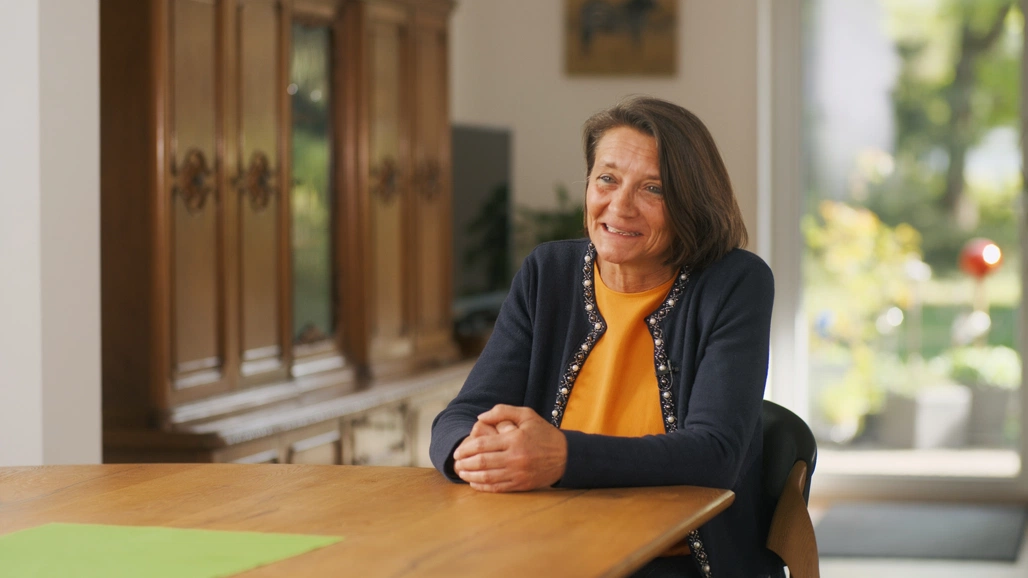
A still from an interview shot with the 50mm @ f2.8. Would you trade this specific look for even more sharpness?

Much of the clean look comes from the T* coating. Its story starts in 1935, when the Zeiss physicist Alexander Smakula patented an anti-reflection coating. The multi-layer version was later labelled T* in Oberkochen, where Zeiss has its headquarters, and from 1972 every Zeiss camera lens was multi-coated, so the Contax line was born with it in 1975. Whitepoint Optics in Helsinki will rebuild these lenses into full cinema housings, but it refuses to recoat them, because the lenses would lose their look. The "not modern" half of Morrison's line matters just as much to me. Modern glass etches every pore into a 4K frame. These lenses leave the skin its texture but spare it the scrutiny, so a face stays flattering even in a tight close-up.

Lenses that have some decency

A still from an interview shot with the 50mm @ f2.8. Would you trade this specific look for even more sharpness?

Farben, in denen Menschen gut aussehen

Die Vergütung hat auch direkten Einfluss auf die Farbe. Streu­licht und interne Reflexionen mischen Licht aus verschiedenen Teilen des Bildes, weshalb Zeiss’ eigener Fach­artikel zu T* schreibt, dass Reflexionen ein Bild seine „Brillanz und Farb­treue“ kosten. Die Farben dieser Objektive sind satt, ohne laut zu sein. Hauttöne fallen mir als Erstes auf: Gesichter behalten ihre Wärme und einen Hauch Röte, und die Verläufe über ein Gesicht bleiben selbst bei schwierigem Licht natürlich. Auch Marko Li sieht Farb­treue als Teil derselben Geschichte wie den Mikro­kontrast, weil trübe Farben die feinen Tonwertunterschiede verschmutzen, die ein Gesicht dreidimensional wirken lassen.

Placeholder: still of skin tones under event lighting, X-H2S with a Contax Zeiss lens
Placeholder
Still: skin tones, X-H2S + Zeiss

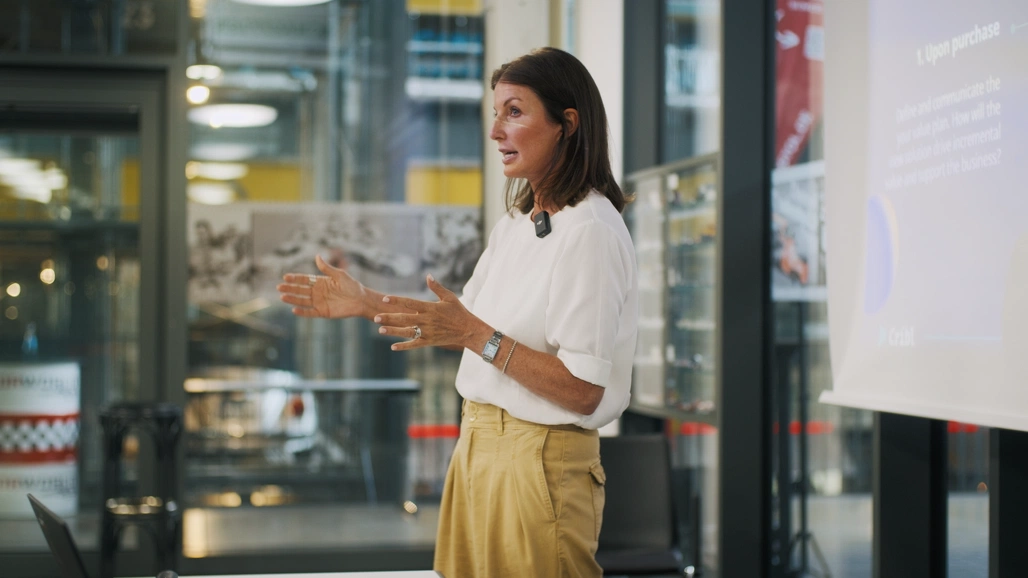
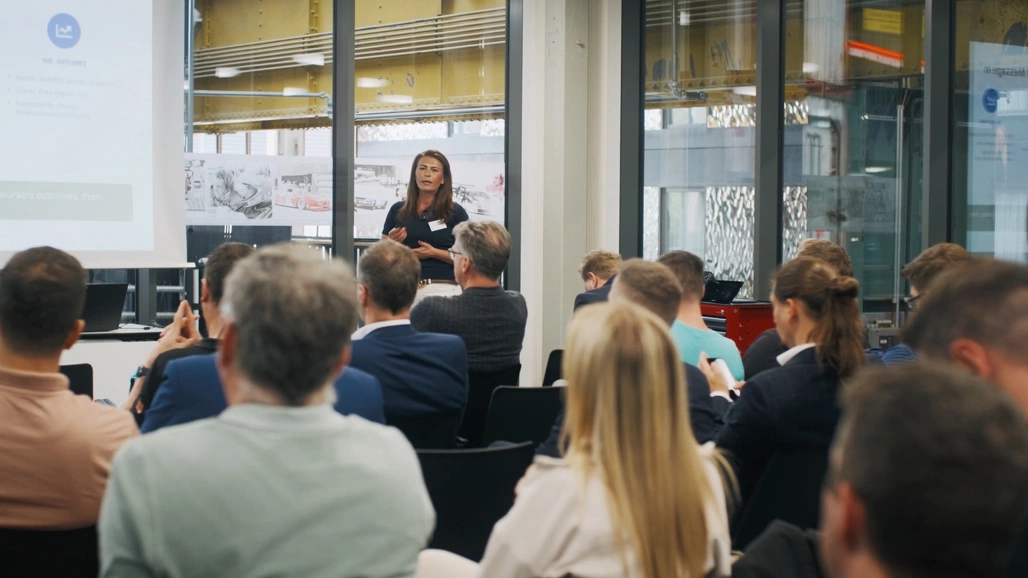
Without that much effort this shot of a speaker presenting a talk during Cribl's partner day in Munich is looking gorgeous. There's both vibrant and subtle colors and gradients, even though this was definitely not like like a movie scene. And again, there's the 3d pop effect that is giving you the feeling you are right there.

I pair the lenses with a Fujifilm X-H2S, shooting F-Log2C, and together they are miles ahead of the typical Sony body with clinical Sony or Sigma lenses. I know that combination well, because I shot Sony myself before making a conscious switch to Fuji, mainly to simplify colour grading. Sony often put strange green shades on people's faces, especially in mixed lighting, and I noticed it even under controlled light. Fuji simply gets skin right, and outdoor scenes look better too, greens especially, with grass that looks like grass rather than artificial turf. Since the switch I spend much less time in Resolve to reach a decent result, which is a polite way of saying I used to lose a lot of time making sure the people who were in front of my camera don't look as if they're feeling unwell. That's my experience across my own jobs, and it's been consistent enough that I stopped doubting it.

Die Preisübergabe wiederholt niemand

Angefangen habe ich mit Reportage- und Dokumentar­arbeit, mit Auto­fokus-Objektiven auf dem Gimbal und nichts anderem, und das hat mich viel Frust gekostet. Der Auto­fokus entschied, was im Bild wichtig war, und war nicht immer meiner Meinung. Auf einem Event ist diese Meinungs­verschiedenheit teuer. Wenn ein bestimmter Moment passiert und sich der Auto­fokus von etwas anderem im Bild ablenken lässt, gibt es keine zweite Chance, denn niemand wiederholt für die Kamera eine Preis­übergabe und die Reaktionen darauf.

Mit manuellem Fokus entscheide ich. So arbeite ich viel lieber, weil ich die Kontrolle über das haben will, was ich tue, einschließlich der Verantwortung, wenn ich daneben­liege. Wenn ein Moment sitzt, dann weil ich ihn kommen sah und recht­zeitig die Schärfe gezogen habe, und das ist ein großer Teil davon, warum sich die Arbeit wie meine anfühlt. Hier zahlt sich der Mikro­kontrast ein zweites Mal aus. Chambers weist darauf hin, dass ein Objektiv mit hohem Mikro­kontrast das manuelle Fokussieren erleichtert, weil ein scharfes Bild sichtbar „einrastet“. Der Fokusweg dieser Foto­objektive ist für Cine-Verhältnisse kurz, etwa halb so lang wie bei einem Cine-Objektiv, deshalb arbeite ich mit einem Fokus­motor. Das ganze Set ist dafür cine-modifiziert: Jedes Objektiv hat einen Zahn­kranz für den Motor, eine geschmeidige, rastenlose Blende und nimmt 82-mm-Filter, genau wie die Fuji- und Tokina-Zooms, die ich nutze, sodass ein Filtersatz auf alles in der Tasche passt.

Placeholder
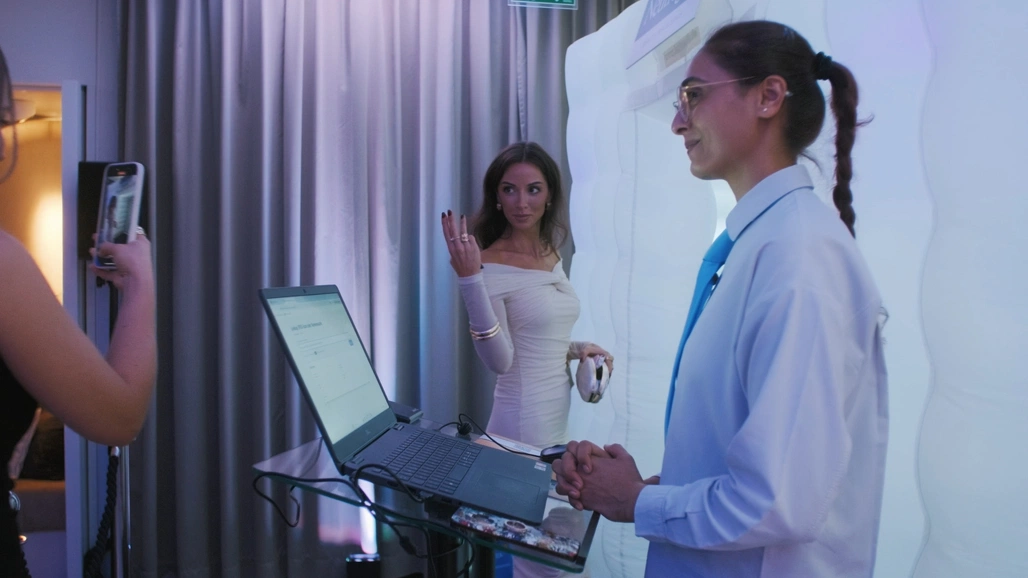
Background video: 135/180 reaction shot

The moment the winners walk out of the crowd: who would the autofocus pick? The woman or her colleague? Or someone in the audience? At an award ceremony, I don't plan to find out after the fact.

Conversion for film

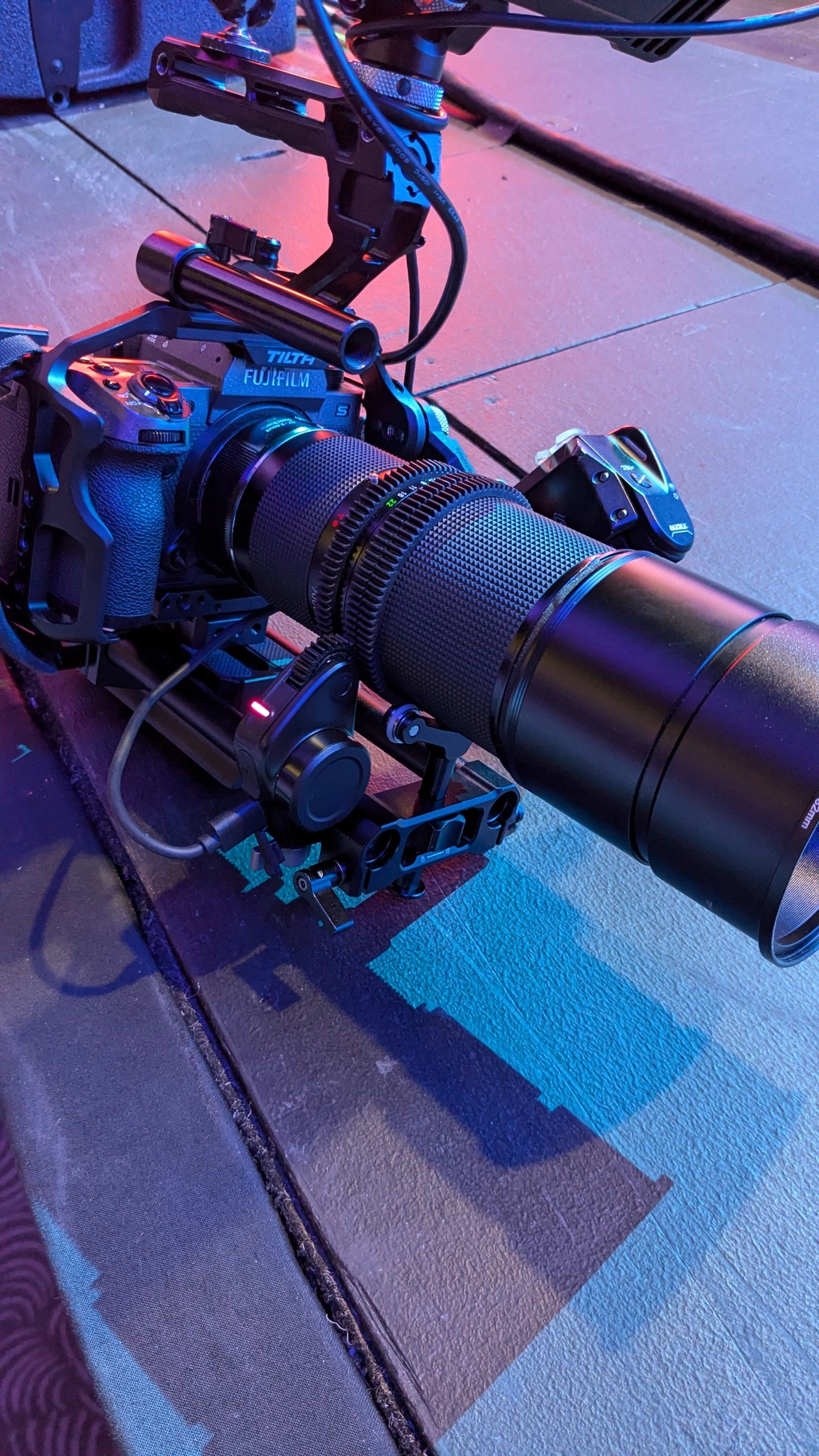
Fujifilm X-H2s with the Contax Zeiss 180mm f2.8 and a 2x extender, effectively converting it to a 360mm f5.6.

The focus throw on these still lenses is short by cinema standards, roughly half of what a cinema lens gives you, so I use a focus motor. The whole set is cine-modded for it: every lens has a gear for the motor, a smooth clickless aperture and takes 82mm filters, the same as the Fuji and Tokina zooms I use, so one set of filters fits everything in the bag.

The seven focal lengths each have a job at events. At events, I choose a lens partly by how close I want to be to people.

The 135 and 180mm let me film a speaker on stage or catch a guest’s reaction from a distance. People are much more at ease when I’m not standing beside them with a camera, and these lenses make a face stand out beautifully against the bustle behind it.
A wide lens brings more of the evening into view: the venue, the crowd, how full the room has become. And when there’s barely room to move, I can use it close to someone and make the viewer feel as though they’re standing there too.
Interviews usually fall somewhere between those two views, using the 35 to 85mm lenses. They all connect to my Fuji through a Metabones Speed Booster, an adapter that restores their original full-frame view and also makes filming in dim rooms a little easier.
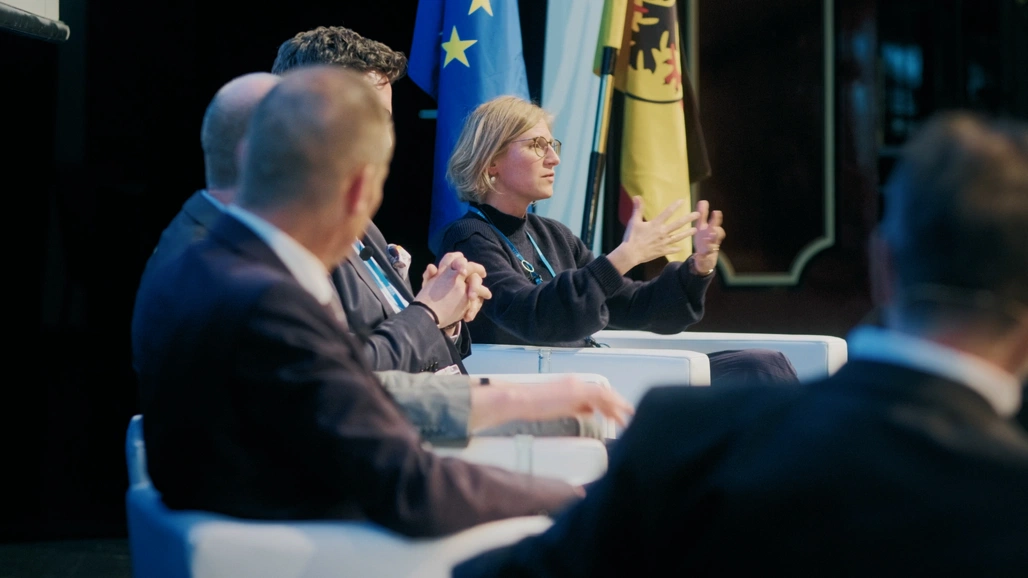
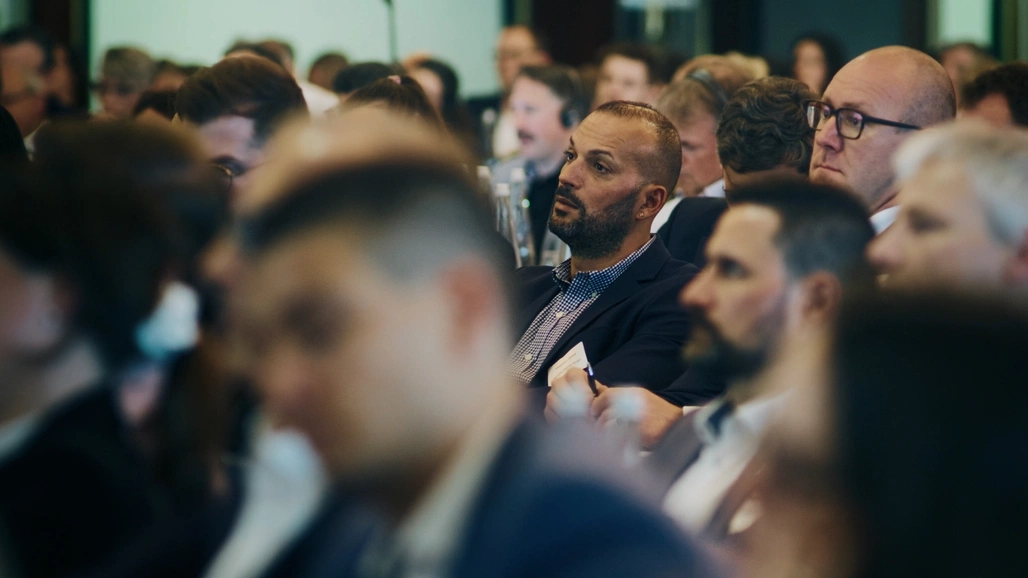
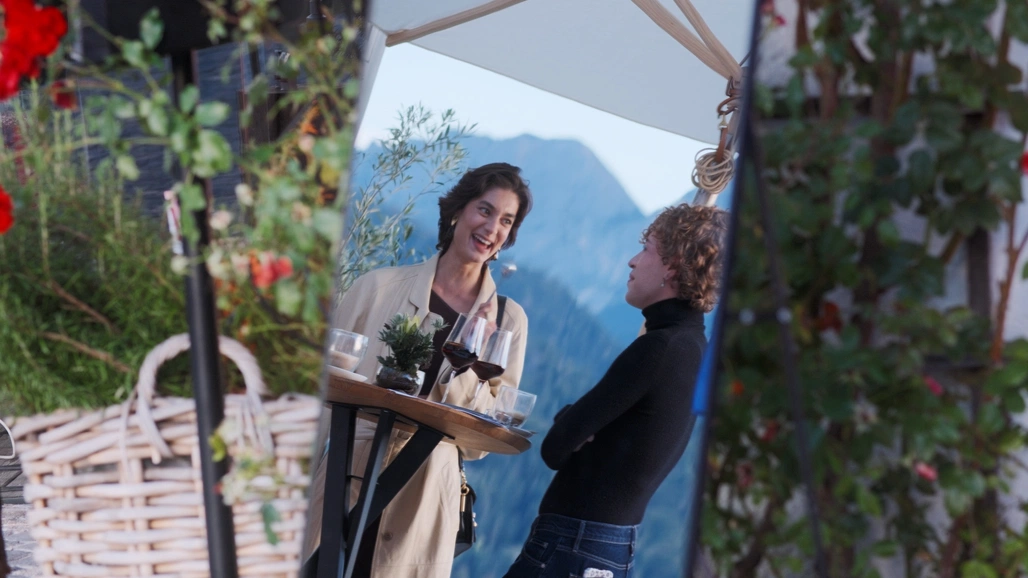
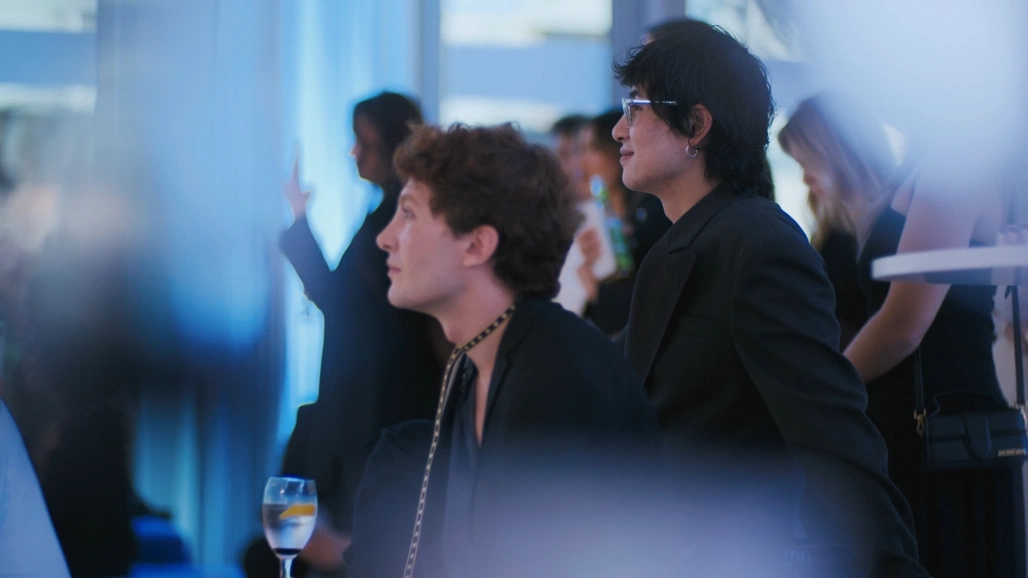
For the type of shot shown on the left, where we watch the speaker over the shoulders of the audience I use the 135mm or 180mm. On the right I used a 50mm, which has the effect that the speaker is smaller in the frame and we see more of the audience. The point is not that one or the other is better, but that it's good to bring in some variety and to know which focal length to use.

In pieces on the desk

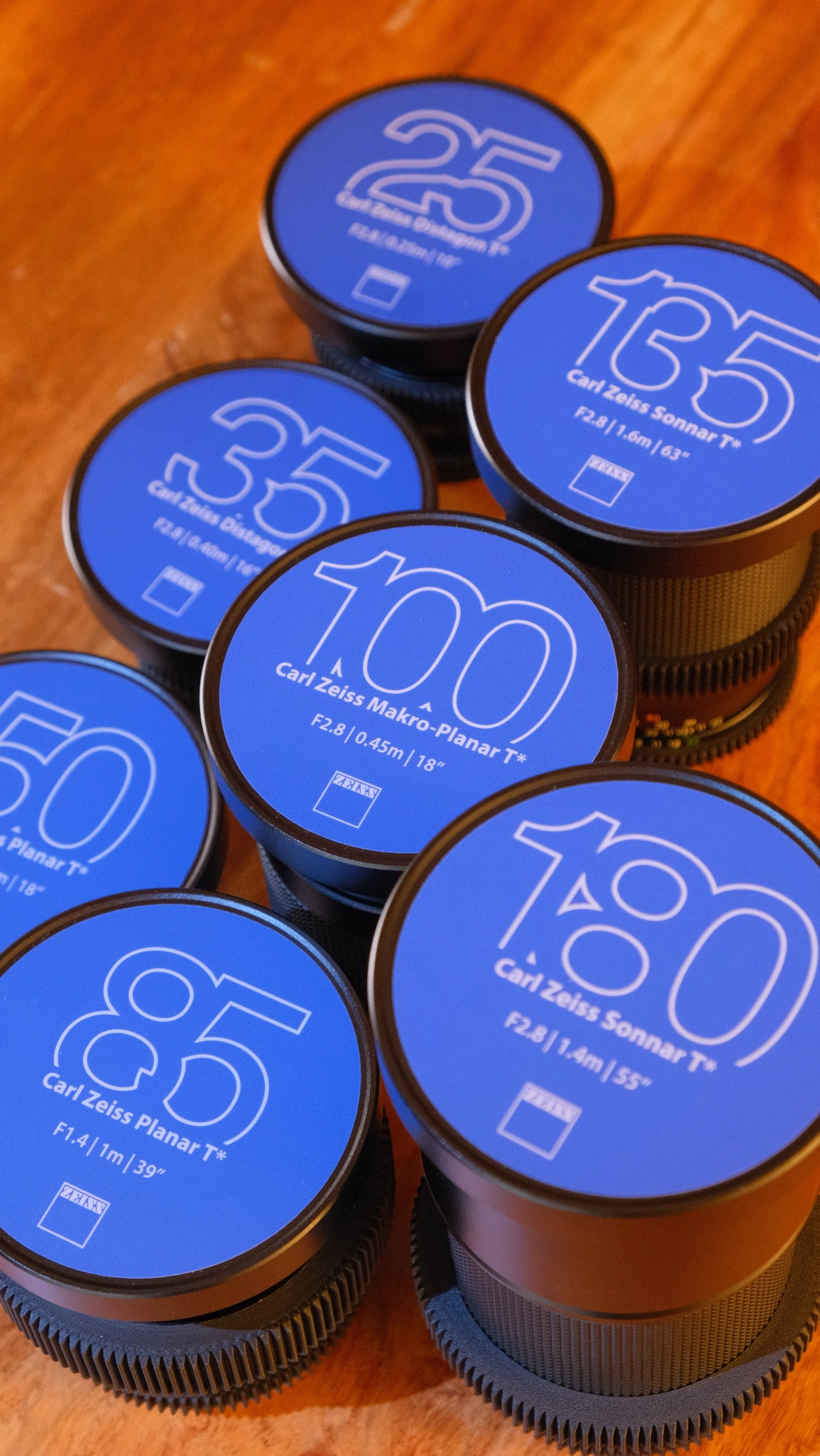
This is the set as it stands today:

ObjektivBauartNaheinstellgrenzeGewicht
Distagon T* 25mm f/2.8Retrofokus-Weitwinkel0,25 m360 g
Distagon T* 35mm f/2.8Retrofokus-Weitwinkel0,40 m245 g
Planar T* 50mm f/1.4Doppel-Gauß0,45 m275 g
Planar T* 85mm f/1.4Doppel-Gauß1,00 m595 g
Makro-Planar T* 100mm f/2.8Makro-Planar0,41 m740 g
Sonnar T* 135mm f/2.8Sonnar-Tele1,60 m585 g
Sonnar T* 180mm f/2.8Sonnar-Tele1,40 m815 g

Daten aus dem Contax-Objektivkompendium von Apotelyt. Gewichte gelten für das Objektiv allein, ohne Adapter oder Speed Booster.

They are built like instruments, with all-metal barrels and a mechanical feel that no modern lens in my bag comes close to. All of mine are MMG or MMJ copies, the later versions made in Germany and Japan, and they date from around the nineties. After thirty years, not everything moves the way it did when it left the factory. Some focus rings are a little stiff, usually from old lubricant, and a few lenses have other small issues, which is fair for equipment of that age. So I've started taking them apart and servicing them myself. It's slow work with small screws and old grease, but there's no better way to see how well these lenses were made. With one of them in pieces on the desk, what surprises me is how little room the mechanics are allowed to take. Everything is engineered around the glass, giving it as much space as possible without costing the focus any of its smoothness, and the whole thing is built so sturdily that a knock against a door frame is nothing I'd worry about.

Der Klick

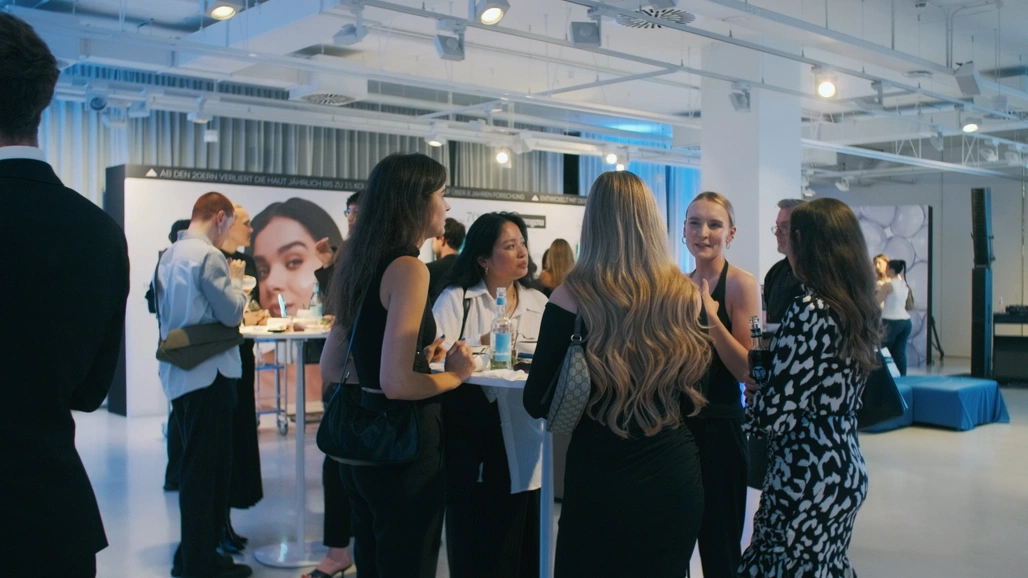
Bei einer Gala zur Produkt­einführung geht der erste Teil des Abends schnell. Bevor die Gäste kommen, und von dem Moment an, in dem sie eintreffen, bis der erste Redner sie von der Bühne begrüßt, brauche ich viel abwechslungs­reiches Material in sehr kurzer Zeit. Für diese Phase nehme ich oft das Fuji-Zoom 18–120 mm, weil es dafür das richtige Werkzeug ist. Es erwischt alles, und in diesem Teil des Abends ist genau das der Job.

Dann beginnt das Programm, und ich wechsle auf die Zeiss-Objektive. In dem Moment, in dem dieses Bild auf dem Monitor erscheint, macht es bei mir klick. Der Raum, den ich gerade noch abgedeckt habe, hat plötzlich wieder Tiefe. Menschen lösen sich aus der Menge hinter ihnen, und Haut sieht selbst unter hartem Bühnen­licht angenehm aus.

Placeholder: background video from a gala, shot on the Zeiss after the programme starts
Placeholder
Background video: gala after the switch

From there the evening turns into looking. With the 135 on, I stop grabbing whatever is in front of me and start waiting for the moments the zoom was too busy to notice: a speaker's last deep breath before walking on, one table starting to clap a beat before the rest of the room, the half-second before a laugh. The evening stops feeling like a shot list, and I believe I often do my best work in that part of the night, because I'm falling in love with what I see.

A face turned toward the stage. The light settling on it. The room falling away behind it. None of it was staged, none of it will happen twice, and for a few seconds the lens and I are its only witnesses.

An evening like this is built to feel a little enchanted: the lights go low, people dress up for it, and the room wants to be remembered kindly. These lenses let the film carry that glow home. I'd leave the modern, clinical glass for the dentist adverts.